


Putting whales back in the ocean and bringing tourism and jobs to Kirkenes
By Laurel Colless - October 14, 2026
The Nordic Whale Reserve (NWR) has an ambitious plan to bring captive whales from around the world to Norway’s Arctic coast. Co-founder Regina Haug calls it a wonderfully simple idea. “Put whales back in the ocean where they belong.”
Under the plan, captive belugas and orcas would be transferred from their tanks to a protected fjord in Kirkenes. Once there, they could learn to forage naturally, rather than relying wholly on humans. Where possible, they would eventually return to the open ocean.
If the model works, its potential reach is high. Around 50 to 60 orcas and more than 300 beluga whales are currently being held in marine parks and aquariums globally.
However, Haug’s vision goes well beyond saving individual whales. Alongside this conservation project, plans have been made for a commercial venture that NWR’s founders hope will become a new driver of tourism and economic growth in the region.
One week became five years
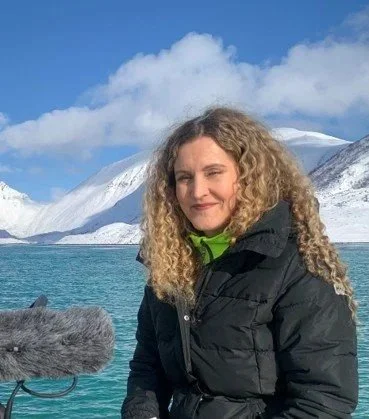
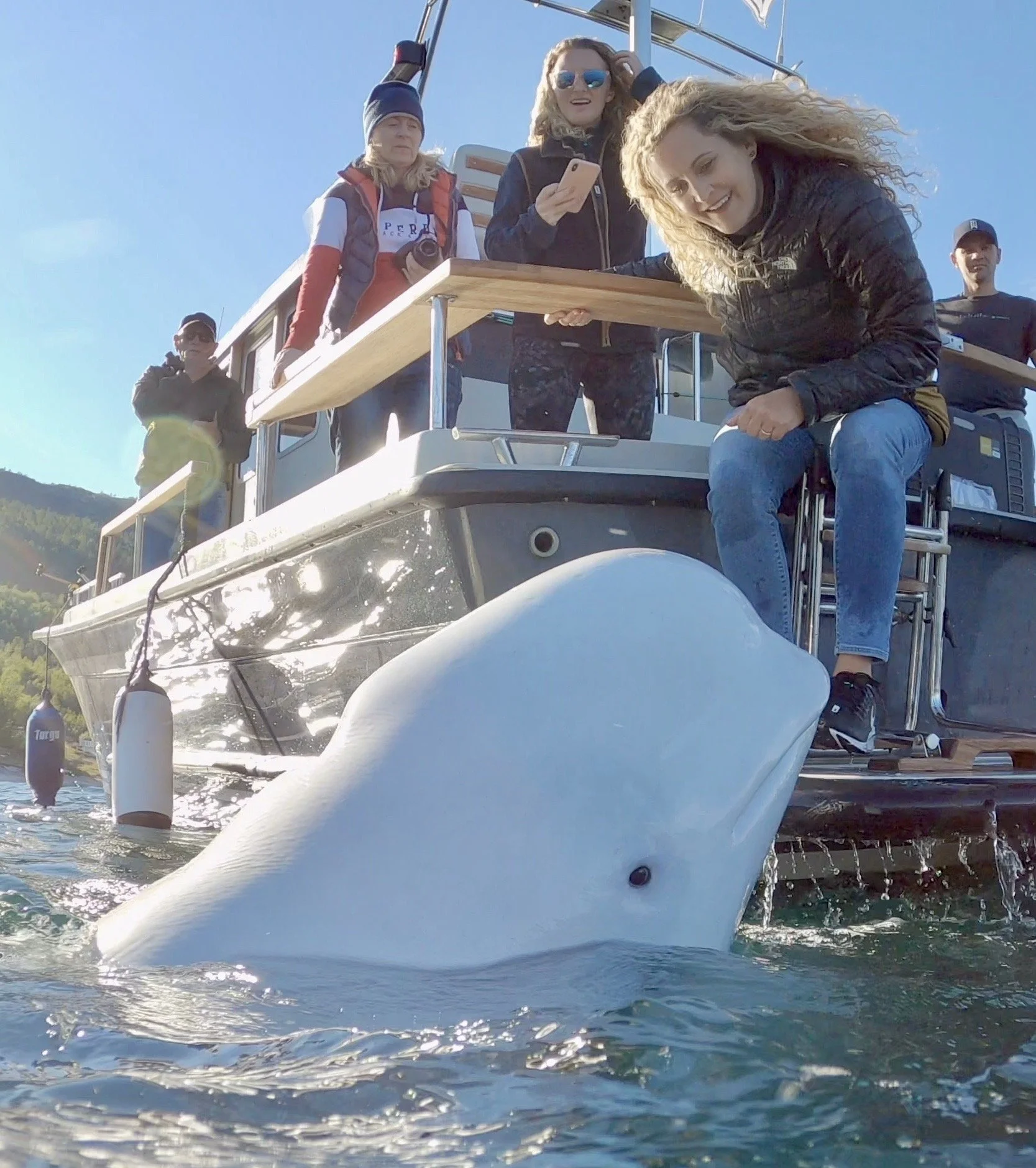
Working as a film maker in California, Haug had previously only directed human actors and had no experience with documentaries. However, she recalls being so inspired by Hvaldimir’s story that she left for Norway to meet him. A one-week film project turned into five years of intervention
“I thought it would be a 20-minute informational video,” Haug recalls. “But instead, I spent five years with Hvaldimir advocating for him and trying to keep a light shone on him so that he wouldn’t easily be forgotten.”
Hvaldimir was used to human contact and often sought the company of people living along shorelines. But not all of it was positive. Haug says it was his friendliness to humans that often put him at risk, particularly when his behavior interfered with people’s livelihoods. “Then he would quickly go from being a cute novelty to making people very unhappy.”
As documented in Haug’s soon to be released feature film SpyWhale, one of Hvaldimir’s was trained to pick up loose ropes or objects from salmon farms and drop them into boat propellers.
“While we were filming him, we couldn’t believe what we were seeing,” Haug recalls. He would tie a rope round the propeller to the point where if you started the boat, it would kill the motor.” This is behavior that humans may once have rewarded as effective military sabotage, but becomes an unwelcome liability in civilian waters.
During her five years advocating for Hvaldimir, Haug built a volunteer and scientific network around him. Her investigation led her to people familiar with Russian training, who described the beluga’s behavior as consistent with the military training of mammals — including putting ropes around propellers.
Learning to be a whale again
Hvaldimir demonstrated the practical problem the reserve will now be trying to solve. A whale trained by humans may be technically “free” but still not know how to live as a wild whale.
How do you teach a captive whale to be wild? Haug asks. Under the plan, the whales would still get to have the human contact they’ve grown up with, but on their own terms.
However, there are no precedents. “It’s a first time and the first of its kind in the world, so we’re all going to be learning together.”
NWR is exploring suitable fjords near Kirkenes that could be enclosed at one end with a net that lets marine life move through while keeping the whales inside. Human access would be controlled. Resident whales could forage, reduce their dependence on people and, where possible, eventually be released.
Conservation as business
For Haug, conservation and commercial success can co-exist. “People want to learn about whales, they want to see them, and so this is just the right way to do it, not having them be trapped in a tank and doing tricks.” Visiting the reserve, she says, would be more like going on a whale safari.
The business model goes beyond the fjord. Plans include a discovery center in Kirkenes that would work in cooperation with educational and scientific programs. That means visitors who come for the whales would also help reenergise business for local hotels, restaurants, and tour and cruise operators.
This commercial element is key to Haug’s vision. “I’ve worked with activists and environmentalists, and I’ve worked with business people, and there’s a bridge there that’s really important,” she says. Also for the reserve to work in the long term, she argues, it will need to be financially as well as ecologically sustainable.
Whales as climate mitigators
The reserve would also provide a platform for research into the wider role whales play in Arctic marine ecosystems. Whales recycle nutrients that support phytoplankton and ocean productivity, while also contributing to carbon storage.
Hvaldimir’s legacy
Sadly, Hvaldimir will never make it to the sanctuary being created in large part because of him. He died off the Norwegian coast in August 2024.
Haug’s hopes now lie with other prospective residents. Two formerly captive orcas in France need a new home following the closure of Marineland Antibes, while in South Korea, Bella and other captive belugas are potential candidates. Bella, who lives alone at the Lotte World Aquarium in the middle of a Seoul shopping mall, is ready to be retired.
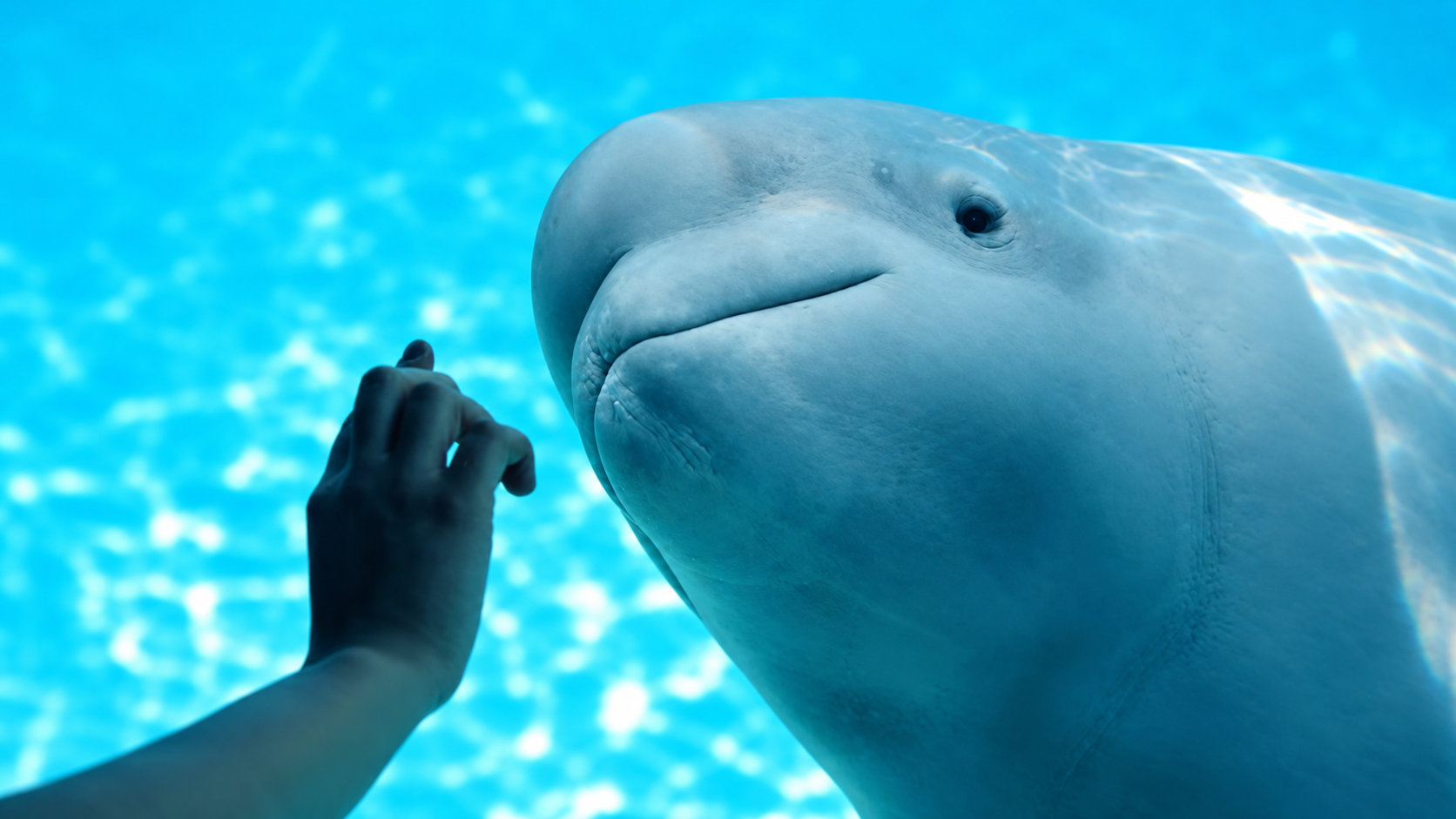
Bella, a captive beluga at Lotte World Aquarium inside a mall in Seoul. Lotte World just signed a letter of intent supporting her relocation to Norway. PHOTO: Nordic Whale Reserve
Bella, who lives alone at the Lotte World Aquarium in the middle of a Seoul shopping mall, is ready to be retired.
Haug estimates Bella’s value to the reserve at around $1 million, arguing that her rehabilitation should be seen not only in conservation terms, but as an economic opportunity. She says this is particularly important in response to suggestions that captive whales such as Bella should be euthanized rather than relocated.
“Bella is not sick or ailing, and we don’t kill healthy animals,” she says. “And financially, why would we throw away an incredibly valuable gift from South Korea, when she could bring prosperity to an Arctic community?”
Haug and members of the Nordic Whale Reserve team have just travelled to South Korea to meet Bella and have returned with a letter of intent from Lotte World committing to send her to Norway. For Haug, this would give Hvaldimir’s story a different kind of conclusion.
“It’s a very sad ending, but the hopeful part is that Bella and others will then be free because of him, and many other whales too.” And with every whale comes another chance, she says, “to connect people and communities with nature.”
Hvaldimir, the Beloved "Spy" Whale, Shot to Death in Norway
FOR IMMEDIATE RELEASE
Hvaldimir, the Beloved "Spy" Whale, Shot to Death in Norway OneWhale and NOAH Seek Criminal Investigation
Sandnes, Norway — September 4, 2024 — Today, OneWhale and NOAH, two prominent animal rights organizations, have filed a police report in connection with the tragic death of Hvaldimir.
READ MORE WARNING: Some of the images on this page are graphic in nature and might be disturbing to some viewers.

Media Inquiries
For more information on supporting this critical project, please contact us. We look forward to any potential collaborations.
Send your questions about your donation, volunteering or any general enquiry to info@onewhale.org.
Media Highlight
CBS NEWS | Beluga, believed to be former spy whale, befriends community in Norway
A beluga whale that may have been outfitted with a camera for spying showed up in Hammerfest, Norway, in 2019. Since then, he has been embraced by members of the community, who named him Hvaldimir. Now, his people are working to make sure he has a safe, fulfilling life.
NRK | Hvaldimir has become toothless: - People must stop sticking planks in his mouth
The celebrity whale Hvaldimir has no more teeth left. The animal welfare organization is concerned that people are playing with him with planks. Read More


